
Small business brand planning
How Useful Branded Merchandise Supports Local Marketing
Useful branded merchandise can connect a local organization with everyday routines. The strongest programs begin with audience fit and a measurable purpose, not a random giveaway.
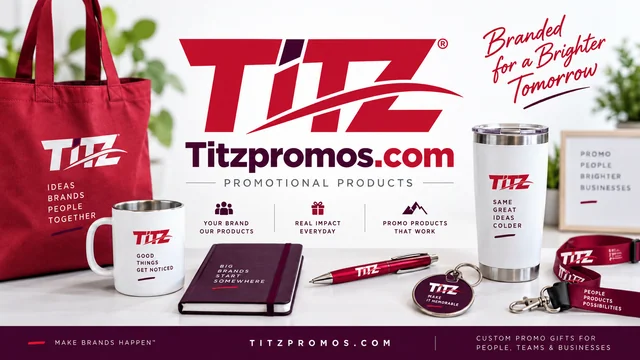
Branded merchandise for small business marketing should make the brand useful in a real moment. A product may welcome a new customer, thank a referral partner, support a neighborhood event or help employees represent the organization. The item matters, but the audience, message and distribution plan matter more.
Start with one marketing purpose
Define what the product should help accomplish before comparing catalogs. Common goals include increasing recognition at a local event, supporting a new opening, thanking repeat customers, encouraging referrals or creating a consistent employee kit.
One product does not need to achieve every goal. A low-cost event giveaway and a customer-appreciation gift can use different products, quantities and decoration while keeping the same visual identity.
Match the product to an everyday routine
A relevant product has a natural place in the recipient’s life. Custom tumblers, mugs and bottles can fit commuting or desk routines. Pens, notebooks and desk accessories support work and study. Kitchen, travel, technology and outdoor items connect with different moments.
Audience fit is more important than novelty. Consider where the product will be stored, how often it may be used, whether it is easy to carry and whether the recipient would choose to keep it.
Use scenarios to narrow the catalog
- Grand openings: easy-to-distribute items with a clear business name or short message.
- Referral programs: a useful thank-you gift aligned with the value of the referral.
- Community sponsorships: products connected to the event, season or participating group.
- Employee programs: coordinated office, drinkware, apparel or technology products.
- Customer appreciation: practical products selected for the customer relationship and setting.
For more examples, read our guide to choosing promotional products for events.
Keep the branding clear
A product is a small physical surface, not a brochure. Give the logo enough space and contrast to remain readable. If the imprint area is limited, prioritize the brand mark, a short URL or a simple campaign phrase rather than several lines of information.
The product material determines the decoration choices. Screen printing, pad printing, laser engraving, UV printing, digital printing and embroidery create different results. Review the printing and decoration comparison before approving the artwork.
Choose a quality level that fits the relationship
Quality does not always mean selecting the highest-priced product. It means choosing construction, materials and presentation that are appropriate for the recipient and the purpose. A high-volume street event may need an economical, easy-to-carry item, while a smaller customer or employee program may benefit from a more substantial product.
Compare samples or detailed specifications when touch, fit or finish affects the experience. For a coordinated set, look for compatible colors and logo treatments rather than assuming products from different categories will match exactly.
Build trust with accurate product information
Clear specifications reduce surprises. Confirm the material, product size, available colors, imprint area, decoration method, packaging, minimum quantity and standard production time. A digital mockup should show the intended logo position and scale.
Website prices should be treated as starting estimates until decoration, packaging, freight, duties and the delivery schedule are confirmed. A detailed written quote gives both sides a shared project reference.
Plan distribution before ordering
Estimate how many people will actually receive the product and reserve a reasonable amount for staff, replacements or follow-up. Ordering solely to reach a lower unit price can create unused inventory, while ordering too few can weaken an event plan.
Decide who will hand out the products, when recipients will receive them and what conversation or action accompanies the gift. For shipped kits, confirm individual packaging and address handling before production.
Coordinate timing with the campaign calendar
Work backward from the launch, event or mailing date. Build in time for product selection, quotation, artwork preparation, proof approval, production, quality checks and transportation. Last-minute changes to color, quantity or artwork can affect both price and delivery.
For repeat programs, record the approved artwork, product number and actual distribution quantity. That information makes the next order easier to plan without assuming the previous product, price or lead time is unchanged.
Measure the campaign without overclaiming
Promotional products can support brand awareness and relationships, but the result depends on the offer, audience, creative work and distribution. Use a measurement approach connected to the campaign rather than assuming every item produces the same return.
- Use a campaign-specific QR code or landing page when appropriate.
- Track the number of products distributed by location or event.
- Record inquiries, signups or redemptions tied to the campaign.
- Ask staff which products created useful conversations.
- Compare results with the complete project cost, not unit price alone.
Create a simple branded-merchandise brief
Write down the audience, purpose, quantity, budget, preferred product category, brand colors, delivery destination and required arrival date. Add any packaging or distribution requirements. This short brief makes product recommendations more focused and quotes more accurate.
Browse promotional products by category, read why useful promotional products support a brand plan, or request recommendations for your campaign.